

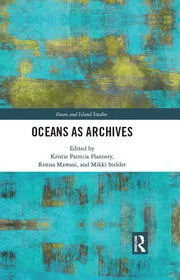
Ifor Duncan, “The Shipwrech Starts Here”, in Oceans as Archives, edited by Kristie Patricia Flannery, Renisa Mawani, Mikki Stelder, 219-241 (Routledge, 2025). This chapter is a complementary text to the two-channel video Il Naufragio Inizia da Qui, which adopts the conceptual lens of a shipwreck society to critique the use of repurposed cruise ships to quarantine
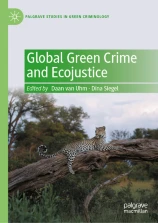
Daan van Uhm, Cedric Ryngaert, Susanne C. Knittel, and Marijke van Kuijk, “Conceptualizing Ecocide: Interdisciplinary Perspectives.” In Global Green Crime and Ecojustice, edited by Daan van Uhm and Dina Siegel, 89–116 (Palgrave Macmillan, 2025). In recent decades, environmental crime has become one of the largest criminal activities in the world with disastrous impacts on the
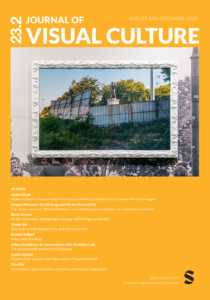
Duncan, I. & Levy, S., ‘Politics of the turbid image: against underwater fascist visual rhetoric’, Journal of Visual Culture, 2025. This article examines submerged environments and modes of visual mediation that are used to depict them. Attending to the turbid image as an optical register of complex material and political conditions, the authors challenge the normalization of
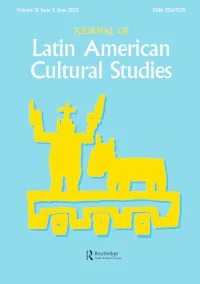
Salomé Lopes Coelho, ‘Turning to stone: diffracted geostoriesand inhuman intimacy in Latin American cinema’, Journal of Latin American Cultural Studies (15 Aug 2025). This essay examines Manuela de Laborde’s film As Without So Within (2016) as a Cinematic Geostory that enacts Inhuman Intimacy within the broader context of the “geological turn” in Latin American cinema. Conceptualising inhuman intimacy as


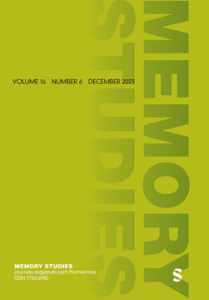
Susanne C. Knittel, ‘Ecologies of violence: Cultural memory (studies) and the genocide-ecocide nexus’, Memory Studies (2023), Volume 16, Issue 6, pp. 1563-1578. Ecocide and large-scale ecological degradation raise critical questions regarding guilt, justice, and responsibility. The complexity and scale of ecological violence present a singular challenge for memory studies, especially when it comes to understanding